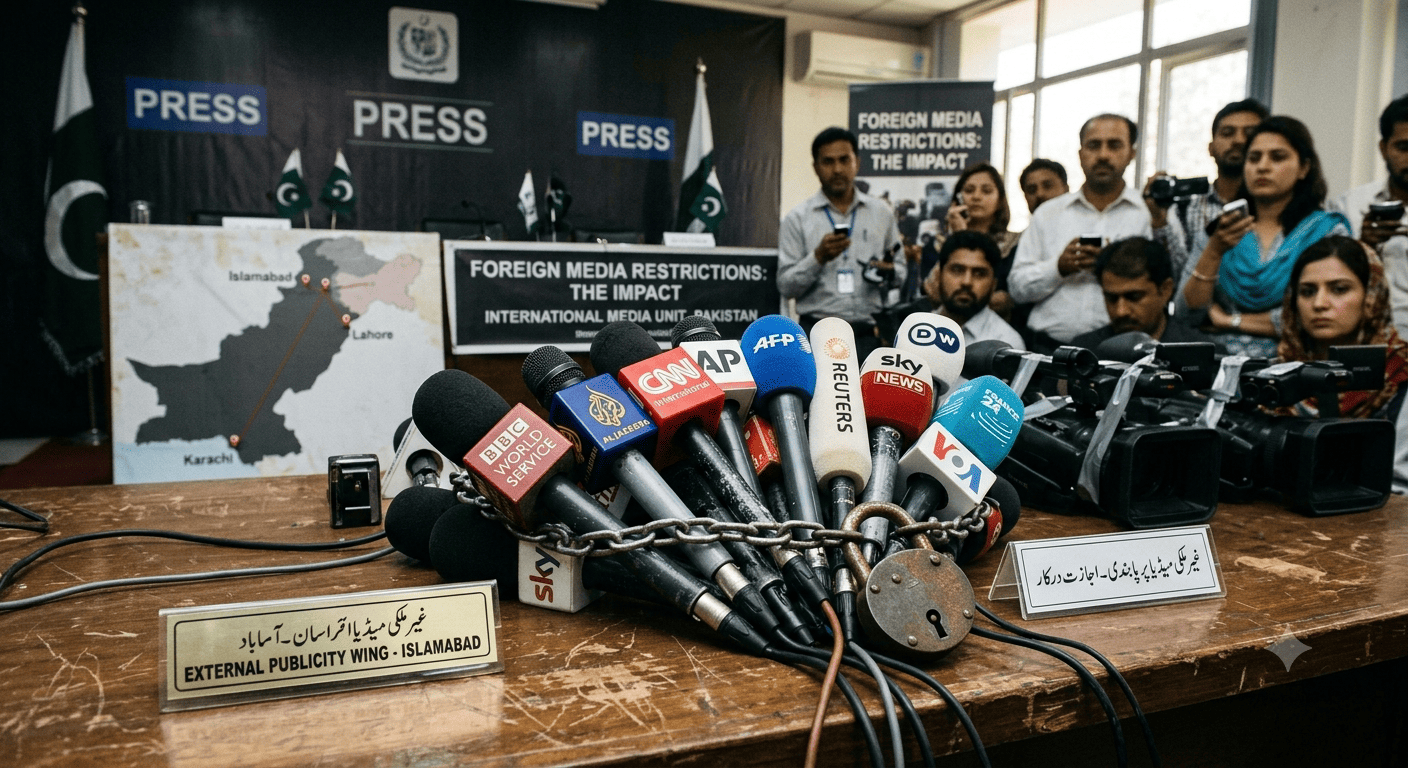
Pakistani authorities have implemented sweeping regulatory restrictions on foreign media operations, effectively prohibiting international correspondents and their local staff from reporting across most of the country without prior government authorization.
Under the newly issued Foreign Media Facilitation Guidelines 2026, published by the Ministry of Information and Broadcasting’s External Publicity (EP) Wing, journalists representing international news outlets are restricted to operating solely within three major urban hubs: Islamabad, Karachi, and Lahore. To conduct reporting, shoot footage, produce documentaries, or generate digital media anywhere outside these three cities, foreign media personnel—including Pakistani nationals working as stringers, fixers, or translators—must first apply for and secure an official No Objection Certificate (NOC).
Crackdown Follows Kashmir Protests Coverage
The abrupt imposition of the guidelines comes in the immediate aftermath of major civil unrest and political protests in Pakistan-administered Kashmir. During the demonstrations and regional election boycotts in Muzaffarabad, international news organizations reported that Pakistani security forces fired upon unarmed demonstrators, resulting in dozens of civilian casualties.
While local media outlets faced domestic censorship pressures, overseas organizations brought global attention to the crackdown. In response, Pakistani officials issued strong denials of security force wrongdoing, ordered visiting international reporters to immediately leave Kashmir, and labeled critical coverage by outlets like Al Jazeera as "yellow journalism". Access to Al Jazeera’s website within Pakistan was subsequently restricted, remaining inaccessible to domestic readers without the use of a Virtual Private Network (VPN).
Vague Terms and Unspecified Timelines
The new regulatory framework introduces strict digital registration requirements for all foreign media operations. However, the guidelines omit critical details regarding the processing timeframe for travel permits, leaving approval schedules entirely at the discretion of authorities.
Furthermore, the guidelines explicitly state that accreditation may be suspended or revoked if a journalist engages in acts deemed contrary to the "ideology, sovereignty, security, or public order of Pakistan". Legal analysts and press freedom advocates warn that these broadly framed stipulations provide state officials with wide latitude to penalize independent coverage.
Widespread Condemnation from Journalists
While the Pakistani government maintains that the guidelines are intended to streamline administrative procedures rather than impose a blanket ban, press union representatives and freedom of expression organizations have condemned the measure.
Pakistan currently ranks 153rd out of 180 countries on the RSF World Press Freedom Index. Senior Pakistani journalists noted that while domestic press restrictions have been common under past administrations, direct systemic movement controls targeting the international press represent an unprecedented escalation. Press advocates warn that the compulsory approval system will significantly impede real-time reporting during breaking news events and further isolate remote or politically sensitive regions from independent global scrutiny.
Leave a Comment
Your comment will appear after review.