
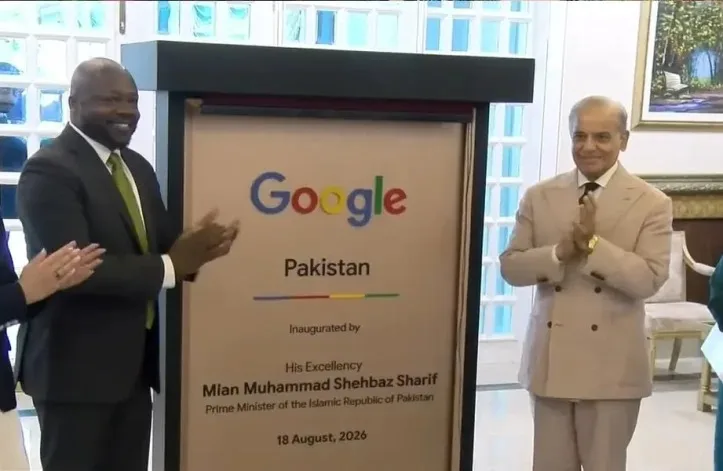
Google Officially Opens First Pakistan Office in Islamabad
Google has officially opened its first local office in Pakistan, marking a major development in the country’s growing digital and technology sector.
The new office in Islamabad was formally inaugurated on Tuesday, August 18, with Prime Minister Shehbaz Sharif welcoming Google Vice President for Global Affairs and Public Policy Wilson White and a company delegation.
The move gives Google a formal corporate presence in Pakistan after more than a decade of engagement with the country's technology ecosystem.
Google Opens First Office in Pakistan
The opening of the Islamabad office represents a new phase in Google's relationship with Pakistan.
Prime Minister Shehbaz Sharif described the development as an important milestone in Pakistan's digital transformation and said the partnership with Google could contribute to the country's technology and economic ambitions.
Federal Minister for IT and Telecommunications Shaza Fatima Khawaja also called Google's local presence a significant step for Pakistan's digital economy and the government's Digital Nation Pakistan vision.
Why Google's Pakistan Office Matters
Pakistan has been pushing to expand its technology sector, increase IT exports and attract international technology companies.
The government has set an ambitious target of increasing annual IT exports to $30 billion, and Google's local presence could strengthen cooperation around digital skills, technology adoption and the country's broader digital economy.
The office is expected to provide Google with a stronger local platform to work with Pakistani businesses, government institutions and other stakeholders.
Google Has Already Been Working With Pakistan
Although the new office is Google's first formal local office in Pakistan, the company has been involved in several initiatives in the country for years.
Google has supported digital-skills training, education programs and technology initiatives for Pakistani users. Its new local presence is expected to make such engagement more structured and easier to expand.
The company has also been involved in Chromebook-related initiatives in Pakistan, adding another dimension to its growing presence in the country's technology market.
What Could It Mean for Pakistani Students and Developers?
Google's arrival is likely to attract particular attention from students, developers, startups, freelancers and technology professionals.
A stronger local presence could create more opportunities for partnerships, digital-skills programs, cloud services, education initiatives and technology-focused projects.
However, the opening of a corporate office does not automatically mean that Google is establishing a major software-engineering or research-and-development hub in Pakistan. The immediate focus appears to be broader corporate, government, digital-economy and market engagement rather than a large Google engineering campus.
Google and Pakistan's Digital Economy
Pakistan has a large young population and a rapidly expanding community of freelancers, software developers, IT companies and digital businesses.
Google's local presence could help strengthen connections between these businesses and Google's global ecosystem.
The development also comes as Pakistan works to improve its position as a destination for technology investment and digital exports.
A New Chapter for Google in Pakistan
The opening of Google's Islamabad office is being viewed as an important milestone for Pakistan's technology sector.
While the long-term impact will depend on the company's future investments and initiatives, its formal presence creates a stronger foundation for cooperation between Google, the Pakistani government and the country's growing digital economy.
For Pakistani technology professionals and students, the bigger question now is what Google does next — from expanding digital-skills programs to supporting startups, cloud adoption, education and other technology initiatives.
For now, one thing is official: Google has established its first local office in Pakistan, opening a new chapter in the company's relationship with the country's digital economy.
Leave a Comment
Your comment will appear after review.