
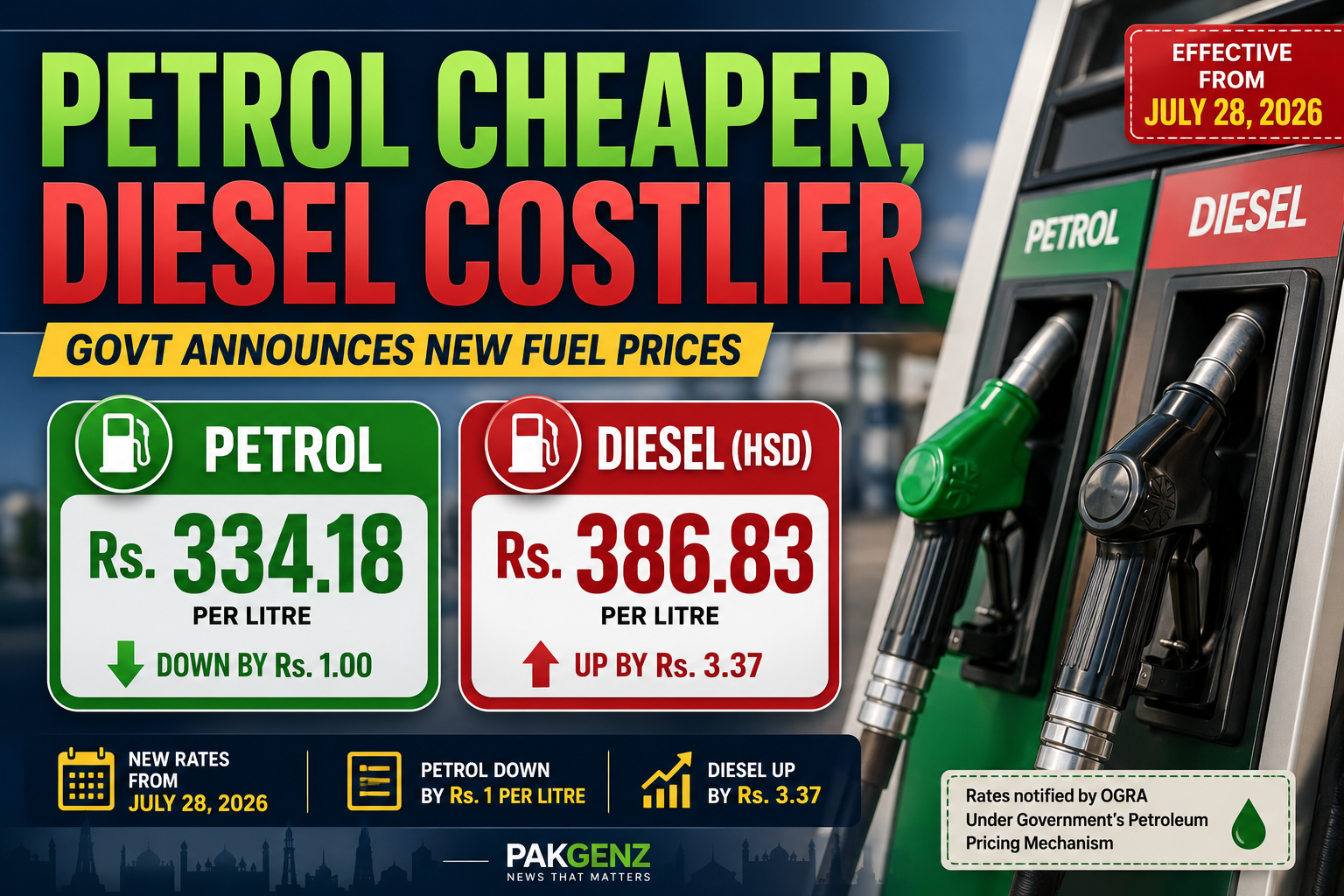
The petrol price in Pakistan has been reduced by Rs. 1 per litre, while the price of high-speed diesel (HSD) has increased by Rs. 3.37 per litre under the latest government adjustment. Petrol will now cost Rs. 334.18 per litre, while diesel will be sold at Rs. 386.83 per litre from July 28, 2026.
The latest rates were revised by the Oil and Gas Regulatory Authority (OGRA) under the government’s current petroleum pricing mechanism.
New Petrol and Diesel Prices in Pakistan
The latest adjustment has produced mixed results for consumers, with petrol becoming slightly cheaper while diesel has become more expensive.
| Fuel | Previous Price | New Price | Change |
|---|---|---|---|
| Petrol | Rs. 335.18/litre | Rs. 334.18/litre | -Rs. 1.00 |
| High-Speed Diesel | Rs. 383.46/litre | Rs. 386.83/litre | +Rs. 3.37 |
The revised rates are effective from July 28, 2026.
Petrol Price in Pakistan Today
The petrol price in Pakistan is now Rs. 334.18 per litre, down from Rs. 335.18.
This represents a reduction of just Rs. 1 per litre, meaning motorists will see only a small decrease in their fuel costs.
For example, filling a 40-litre tank at the new rate would cost approximately Rs. 13,367.20, before any station-specific considerations.
Diesel Price in Pakistan Today
The diesel price in Pakistan has increased by Rs. 3.37 per litre.
The new HSD price is Rs. 386.83 per litre, compared with the previous rate of Rs. 383.46.
Diesel is widely used by commercial vehicles, trucks, buses, agricultural machinery and other heavy-duty equipment, so an increase in its price can have a broader effect on transportation and operating costs.
Why Did Petrol and Diesel Prices Change?
The latest fuel adjustment was made under the government’s revised petroleum pricing mechanism.
According to the Ministry of Energy, OGRA revised the ex-depot prices of petroleum products for the latest period. The government has moved toward a more frequent pricing system in which petroleum prices can be adjusted according to changes in international market conditions.
This means petrol and diesel prices can change more frequently than under the traditional fortnightly pricing system.
How Much Did Petrol Price Decrease?
The new petrol rate is Rs. 334.18 per litre, which is Rs. 1 lower than the previous price of Rs. 335.18.
The reduction is relatively small compared with the recent movements in petroleum prices.
Petrol Price Change
Old price: Rs. 335.18/litre
New price: Rs. 334.18/litre
Reduction: Rs. 1/litre
How Much Did Diesel Price Increase?
The HSD rate increased by Rs. 3.37 per litre.
Diesel Price Change
Old price: Rs. 383.46/litre
New price: Rs. 386.83/litre
Increase: Rs. 3.37/litre
The increase is considerably larger than the reduction in petrol prices.
Impact of Higher Diesel Prices
The diesel price in Pakistan is particularly important for the transportation and agricultural sectors because diesel-powered vehicles and machinery are widely used for commercial and industrial activities.
Higher diesel costs can increase operating expenses for:
-
Trucks and freight transport
-
Buses and commercial vehicles
-
Agricultural machinery
-
Construction equipment
-
Logistics companies
-
Goods transportation
Businesses may eventually pass some of these higher transportation costs on to consumers through increased prices for goods and services.
Impact on Petrol Consumers
Petrol users receive a small benefit from the latest adjustment.
The Rs. 1 per litre reduction means motorists will pay slightly less when refuelling their cars and motorcycles.
However, the impact on individual household budgets will remain limited because the decrease is relatively small.
For a motorcyclist buying 10 litres, the saving is only Rs. 10 compared with the previous rate.
Latest Petrol Price in Pakistan — Quick Facts
| Detail | Latest Information |
|---|---|
| Petrol Price | Rs. 334.18/litre |
| Diesel Price | Rs. 386.83/litre |
| Petrol Change | Down Rs. 1 |
| Diesel Change | Up Rs. 3.37 |
| Previous Petrol Price | Rs. 335.18/litre |
| Previous Diesel Price | Rs. 383.46/litre |
| Effective Date | July 28, 2026 |
| Regulator | OGRA |
The figures were confirmed by the Ministry of Energy and reported by multiple Pakistani news outlets.
Will Petrol and Diesel Prices Change Again?
Under the government’s current daily pricing mechanism, petroleum rates can be reviewed frequently based on market conditions.
This means the current petrol price today in Pakistan should not necessarily be considered fixed for an extended period.
Changes in international oil prices, import costs and other market factors can influence subsequent adjustments.
Consumers should therefore check the latest official notification when planning fuel purchases or calculating future transportation costs.
Petrol Price in Pakistan — FAQs
What is the petrol price in Pakistan today?
The latest petrol price is Rs. 334.18 per litre, effective July 28, 2026.
What is the diesel price in Pakistan today?
The current high-speed diesel price is Rs. 386.83 per litre.
How much has petrol become cheaper?
Petrol has become Rs. 1 per litre cheaper, falling from Rs. 335.18 to Rs. 334.18.
How much has diesel increased?
High-speed diesel has increased by Rs. 3.37 per litre, from Rs. 383.46 to Rs. 386.83.
When are the new fuel prices effective?
The revised petrol and diesel rates are effective from July 28, 2026.
Who determines petrol and diesel prices in Pakistan?
OGRA revises petroleum prices under the government’s petroleum pricing mechanism, with the latest adjustment issued through the Ministry of Energy’s Petroleum Division.
Is diesel more expensive than petrol in Pakistan?
Yes. Under the latest rates, diesel costs Rs. 386.83 per litre, compared with Rs. 334.18 per litre for petrol.
Bottom Line
The petrol price in Pakistan has fallen by Rs. 1 to Rs. 334.18 per litre, while high-speed diesel has increased by Rs. 3.37 to Rs. 386.83 per litre. The revised rates are effective from July 28, 2026, under the government’s current petroleum pricing mechanism.
The small petrol reduction provides limited relief to motorists, while the higher diesel price could increase costs for transportation, agriculture and other diesel-dependent sectors.
Published: July 28, 2026
Category: Economy & Business
Author: PakGenZ Business Desk
Source: Ministry of Energy / OGRA