
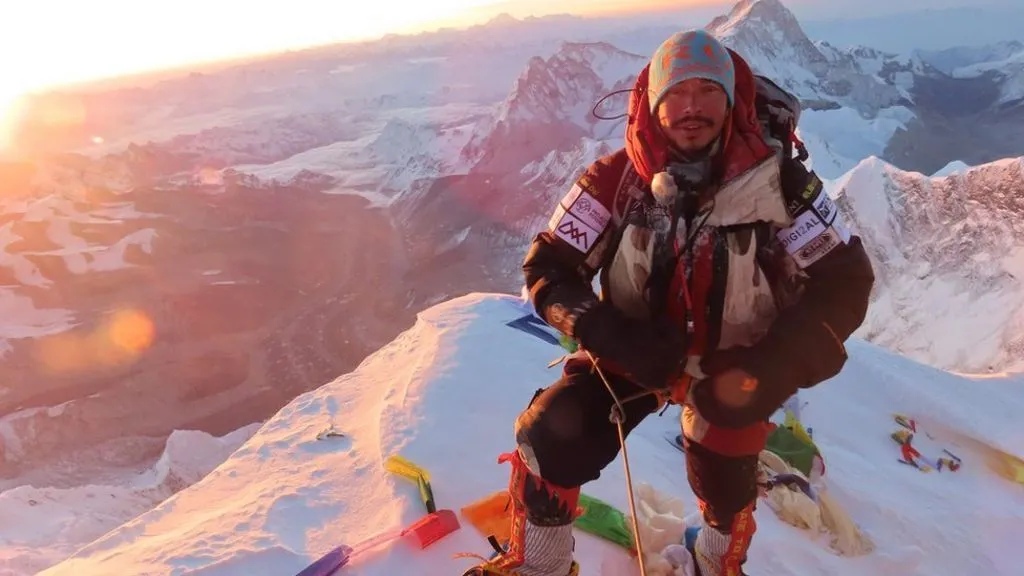
Nirmal "Nimsdai" Purja, the Nepal-born mountaineer who once climbed all 14 of the world's highest peaks in under seven months, has died in an avalanche on Pakistan's Broad Peak. The avalanche struck his ten-member expedition team around midday on Thursday, July 30, 2026, in the Karakoram range of Gilgit-Baltistan. His company, Elite Expeditions, confirmed his death in a statement on Saturday, August 1. Rescue teams are still searching for several other climbers from the group.
What Happened on Broad Peak
An avalanche hit a ten-person climbing expedition on Broad Peak, the world's 12th-highest mountain, at roughly midday local time on Thursday, July 30, 2026. The peak sits in the Karakoram range in Pakistan's Gilgit-Baltistan region, near the border with China. Communication with the group was lost soon after, and search-and-rescue helicopters were grounded for hours by poor weather, slowing efforts to reach the site.
By Friday, ground teams had located four bodies and recovered three of them. Two days later, Elite Expeditions — the company Purja founded and used to lead the expedition — confirmed that its founder had also died, along with other unnamed members of the group. As of Saturday, six of the ten climbers remained unaccounted for.
Who Was Nirmal Purja
Nirmal Purja, known widely as "Nims," was 43 years old. He was born in Nepal and later served 16 years in the British armed forces, including a decade in the special forces, becoming the first Gurkha soldier to summit Mount Everest while still serving. Queen Elizabeth II awarded him an MBE in 2018 for his high-altitude mountaineering achievements. He lived in Hampshire, England, with his wife and young daughter.
Purja became a global name in 2019 after climbing all 14 of the world's mountains above 8,000 metres in just 189 days — smashing the previous record, held by South Korean climber Kim Chang-ho, by more than seven years. His achievement was later chronicled in the Netflix documentary 14 Peaks: Nothing Is Impossible, released in 2021, which introduced him to a global audience far beyond the climbing world. His speed record itself stood until 2023, when Norwegian climber Kristin Harila and her Nepali climbing partner Tenjen Sherpa completed all 14 peaks in 92 days.
The Climbers Who Died
Three of the four recovered bodies had been formally identified as of Saturday:
- Pur Bahadur Gurung, known to friends as "Yukta," a Nepali climber who had summited Everest ten times and once climbed K2 in under 24 hours. He regularly took part in mountain rescue operations for stranded tourists.
- Nadhira Al Harthy, an Omani climber and geographer who, in 2019, became the first Omani woman to summit Everest, and later the first Omani to summit K2. She had previously worked at Oman's Ministry of Education.
- Sarah Mallory Geis, 39, an American climber from San Antonio. Broad Peak was her first attempt at an 8,000-metre peak; she had closed her Pilates studio earlier this year to pursue high-altitude climbing full time.
Officials had not identified the fourth recovered body as of Saturday. Nepal's Prime Minister, Balendra Shah, said the group included six climbers of Nepalese origin — a figure that appears to include Purja himself, given his birthplace — and four other foreign climbers. Alongside the five Nepali team members and Purja, the expedition included Al Harthy, Geis, Pakistani guide and photographer Sohail Sakhi, and a Chinese climber identified only by the surname Wang.
Rescue Operation: Where Things Stand
Search-and-rescue efforts have been hampered throughout by the terrain and weather. A Gilgit-Baltistan tourism department official described the search area as remote and difficult to access. The Alpine Club of Pakistan, which is coordinating parts of the rescue, said its teams had visually located additional bodies but had not yet been able to reach them physically.
This remains a developing story, and some details — including the final confirmed death toll and the identity of the fourth recovered climber — had not been officially finalized at the time of writing.
Why Purja Was on Broad Peak at All
According to a post Purja made on social media just days before the avalanche, Broad Peak was not originally part of his plan. He had intended to climb only Gasherbrum II on this trip. But he decided at the last moment to add Broad Peak, reasoning that it would leave him just one more mountain — Cho Oyu — away from becoming the first person in history to climb all 14 of the world's 8,000-metre peaks twice, without supplemental oxygen.
He wrote that the opportunity had not been planned, adding that such chances tend to arrive quietly for those already putting in the work. It would turn out to be one of his final public messages.
Tributes From Around the World
Purja's older brother, Kamal, confirmed the family's grief in a public statement, saying they would miss him every day. UK Defence Secretary Wes Streeting called Purja an inspirational figure whose military service and mountaineering achievements were known worldwide. Nepal's Prime Minister described the climbers' courage and contributions as a lasting inspiration to the country. Naila Kiani of the Alpine Club of Pakistan, who had climbed on several expeditions led by Purja, described him as an exceptionally experienced and fearless leader.
About Broad Peak and Its History
Broad Peak rises 8,051 metres (26,414 feet) above sea level, making it the 12th-highest mountain on Earth. It was first summited in 1957 by an Austrian expedition. While generally considered less technically demanding than its neighbour K2, it is known for sudden, harsh weather shifts that have claimed many lives over the decades — including three Iranian climbers who died descending the mountain in 2013.
Broad Peak vs K2
| Feature | Broad Peak | K2 |
|---|---|---|
| Height | 8,051 m (26,414 ft) | 8,611 m (28,251 ft) |
| World ranking | 12th highest | 2nd highest |
| Location | Karakoram, Gilgit-Baltistan, Pakistan | Karakoram, Gilgit-Baltistan, Pakistan |
| First ascent | 1957 (Austrian expedition) | 1954 (Italian expedition) |
| Known hazard | Sudden weather shifts | Extreme technical difficulty, steep faces |
Key Highlights
- Nirmal Purja, 43, died in an avalanche on Pakistan's Broad Peak on July 30, 2026.
- His death was confirmed by his company, Elite Expeditions, on August 1.
- Ten climbers were on the expedition; as of Saturday, six remained missing.
- Three victims have been formally identified: Pur Bahadur Gurung, Nadhira Al Harthy, and Sarah Mallory Geis.
- Purja became famous in 2019 for climbing all 14 of the world's 8,000-metre peaks in 189 days.
- He was a former British special forces soldier and the first Gurkha to summit Everest while serving.
- He had been aiming to become the first person to climb all 14 eight-thousanders twice, without oxygen.
- Broad Peak is the world's 12th-highest mountain, located in Pakistan's Karakoram range.
- Search-and-rescue operations are continuing in difficult terrain and weather.
Frequently Asked Questions
Who was Nirmal Purja?
A Nepal-born former British special forces soldier who became famous for climbing all 14 of the world's 8,000-metre peaks in 189 days in 2019.
How did Nirmal Purja die?
He died in an avalanche that struck his climbing expedition on Broad Peak in Pakistan on July 30, 2026.
Where is Broad Peak located?
In the Karakoram mountain range, in Pakistan's Gilgit-Baltistan region, near the Chinese border.
How many climbers were on the expedition?
Ten, including Purja, five Nepali climbers, an Omani climber, an American climber, a Pakistani guide, and a Chinese climber.
How many people have died in the avalanche so far?
Four bodies had been recovered as of Saturday, three formally identified, with six climbers still missing.
What is Broad Peak's height?
8,051 metres (26,414 feet), making it the 12th-highest mountain in the world.
What was Purja trying to achieve on this expedition?
He hoped to become the first person to climb all 14 eight-thousanders twice, without supplemental oxygen, after adding Broad Peak to his original plan of climbing only Gasherbrum II.
Was Nirmal Purja's climbing record ever broken?
Yes. His 2019 record of 189 days was broken in 2023 by Norwegian climber Kristin Harila and Nepali climber Tenjen Sherpa, who completed all 14 peaks in 92 days.
Did Nirmal Purja serve in the military?
Yes, he served 16 years in the British armed forces, including 10 years in the special forces, and was the first Gurkha to climb Everest while still serving.
Is Broad Peak considered dangerous?
Yes. While less technically demanding than neighbouring K2, it is known for sudden, severe weather changes that have caused multiple fatal incidents over the years.
This is a developing story. The final death toll and full identities of all victims had not been officially confirmed at the time of publication.