
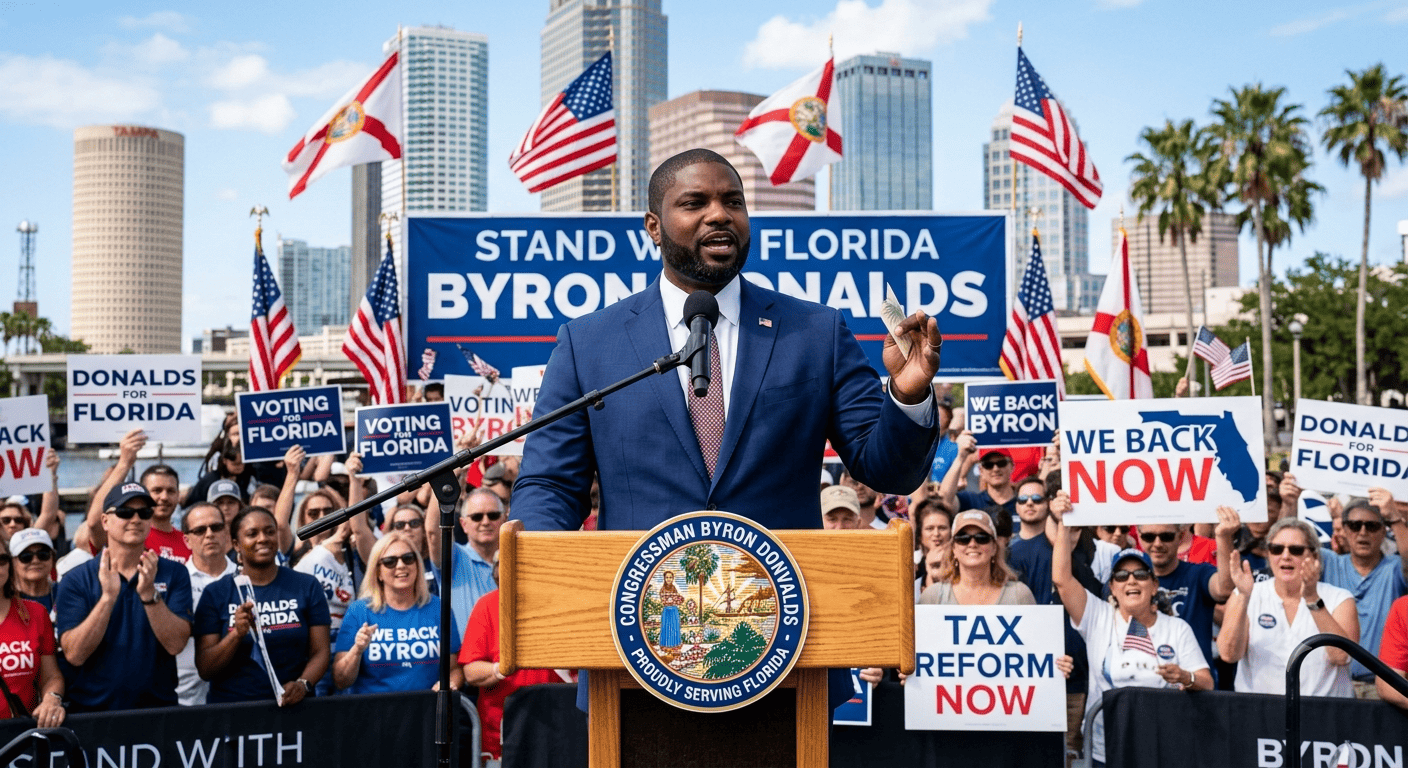
Florida Congressman and Republican gubernatorial candidate Byron Donalds has pledged to pursue a complete rewrite of the state's property tax system next year, whether or not voters pass Amendment 3 in the upcoming general election.
Addressing voters in The Villages, Donalds emphasized that Florida homeowners need significant long-term relief from rising tax burdens. "Whether it passes or whether it doesn't, next year in the Florida Taxation and Budget Reform Commission, we are going to bring proposals for a full and complete reform of property taxes and fees in Florida," Donalds stated.
Core Details of Amendment 3
-
Homestead Exemption Expansion: The measure would increase non-school property tax exemptions to $150,000 in 2027 and $250,000 in 2028, with future adjustments tied to the Consumer Price Index (CPI).
-
Non-Homestead Assessment Caps: It would lower the annual assessment increase cap for non-homestead properties (such as rental units and commercial buildings) from 10% to 5%.
-
New Resident Phase-In: Floridians moving to the state after December 31, 2026, would face a five-year waiting period to receive full homestead exemptions.
-
Supermajority Requirement: To amend the Florida Constitution, the measure requires at least 60% voter approval.
The Political and Financial Debate
While Donalds supports Amendment 3, he has voiced reservations regarding potential loopholes. Specifically, he warned that local municipal governments might attempt to offset lost property tax revenues by increasing non-ad valorem assessments and special fees.
The Financial Impact on Local Budgets
According to estimates from the Florida Office of Economic and Demographic Research, Amendment 3 could remove roughly $11.86 billion annually from local government budgets once fully implemented. Representatives from the Florida Association of Counties note that some rural, fiscally constrained counties could lose between 20% and 33% of their tax revenue, potentially impacting municipal services, public safety, and infrastructure funding.
The 2027 Reform Timeline
If Amendment 3 fails to reach the 60% threshold, Donalds plans to leverage the Florida Taxation and Budget Reform Commission—a constitutional body that convenes once every 20 years—when it meets in January 2027. This commission has the direct authority to place constitutional amendments regarding taxation straight onto future statewide ballots.