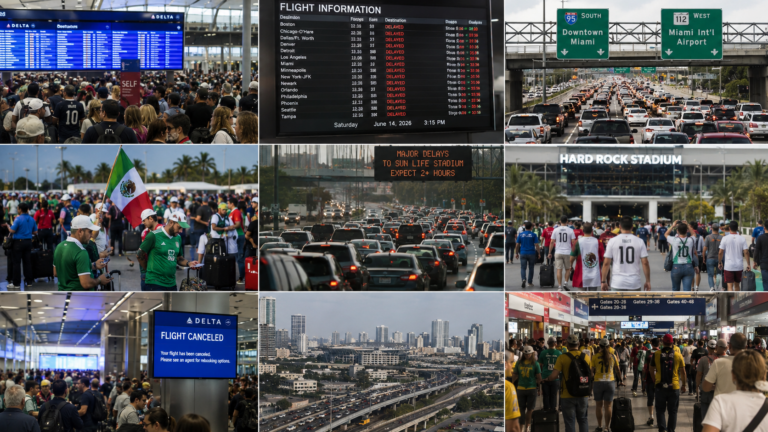
Why the 2026 FIFA World Cup Transit Debate Is Growing
The 2026 FIFA World Cup Transit discussion is becoming one of the biggest talking points ahead of the tournament, and for good reason.
For the first time in football history, the FIFA World Cup will feature 48 teams. That means more matches, more host cities, and millions of additional visitors traveling across North America during a single tournament.
Unlike previous World Cups hosted within smaller geographic regions, FIFA 2026 will stretch across the United States, Canada, and Mexico. Fans could travel from New York to Dallas, Los Angeles to Miami, or Toronto to Mexico City within just a few days.
That massive scale is now raising serious questions about America World Cup Transportation systems and whether the country’s infrastructure can truly handle the pressure.
Why FIFA 2026 Travel Concerns Are Increasing
The biggest reason behind growing FIFA World Cup 2026 Travel Issues is simple: distance.
In previous tournaments held in countries like Germany, France, or Qatar, supporters could often travel between stadiums quickly using trains or short regional transit routes. European nations especially rely heavily on high-speed rail systems that connect major cities efficiently.
The United States offers a very different experience.
American transportation is heavily dependent on highways, airports, and private vehicles. Many host cities are separated by thousands of miles, making air travel almost unavoidable for international fans attending multiple matches.
Critics believe this could lead to:
- Expensive domestic flights
- Heavy airport congestion
- Traffic delays around stadiums
- Long travel times between matches
- Confusing transit systems for international visitors
As excitement for FIFA 2026 grows, concerns surrounding US Infrastructure FIFA 2026 preparations are growing just as fast.
America’s Infrastructure Has Already Faced Criticism
The current concerns are not appearing out of nowhere.
For years, engineers and transportation experts have warned about aging roads, bridges, rail systems, and public transportation across the United States. Many infrastructure reports have highlighted maintenance issues and underinvestment in transit systems nationwide.
Now, with millions of football supporters expected to arrive during FIFA 2026, those existing weaknesses are receiving global attention.
Cities like:
- Los Angeles
- New York City
- Houston
- Miami
already experience major daily congestion problems. Transportation analysts fear the arrival of millions of additional travelers could push some systems beyond their limits.
This growing debate is becoming central to discussions about FIFA 2026 Infrastructure Problems and America’s ability to host the largest World Cup ever organized.
European Fans Could Face Major Culture Shock
One major reason the 2026 FIFA World Cup Transit debate is trending online is the difference between European and American transportation culture.
Many European football fans are used to:
- High-speed train systems
- Walkable stadium districts
- Reliable metro connections
- Direct rail access between cities
However, many American sports venues were designed primarily around car travel.
Large parking lots often surround stadiums instead of train stations or metro hubs. In several host cities, rail access remains limited or inconvenient. Some fans may need to combine flights, rental cars, shuttle buses, and ride-sharing services just to attend matches in different cities.
For international visitors attending their first event in America, that adjustment could become one of the biggest challenges of the tournament.
Airports Could Become the Biggest Pressure Point
While stadium transportation receives most public attention, many experts believe airports could become the real problem during FIFA 2026.
Host cities such as:
- Atlanta
- Seattle
- Dallas
- Boston
already manage enormous passenger volumes every year.
During the tournament, airports may experience record-breaking demand from both domestic and international travelers. Analysts predict possible:
- Flight delays
- Overcrowded terminals
- Long security lines
- Higher airfare prices
- Increased baggage delays
Even small weather disruptions or staffing shortages could quickly affect the national flight network because so many fans will rely on air travel between cities.
Since host locations are spread across an entire continent, flying will remain essential for most supporters attending multiple games.
That reality is fueling even more concern around FIFA World Cup 2026 Travel Issues ahead of kickoff.
Some Cities Are Already Trying to Improve Transportation
To avoid major embarrassment on the global stage, several host cities are already expanding transportation preparations.
Local governments and transit agencies are now working on:
- Airport renovations
- Expanded shuttle systems
- Temporary transit routes
- Traffic management plans
- Park-and-ride programs
- Additional bus services
Federal transportation funding has also been announced to help cities prepare for the tournament.
Officials insist the United States has extensive experience hosting massive sporting events like the Super Bowl, Olympics, and international tournaments. However, critics argue that FIFA 2026 operates on an entirely different scale.
Some transportation experts worry certain projects may begin too late or remain unfinished before the tournament officially starts.
Dallas and Houston Facing Extra Scrutiny
Among all host cities, Dallas and Houston are receiving particularly strong criticism regarding America World Cup Transportation readiness.
Both cities rely heavily on car travel and have more limited public transit systems compared to many international football destinations.
Transportation analysts fear supporters attending matches in these areas could experience:
- Severe traffic congestion
- Long stadium exit times
- Limited public transit options
- Overcrowded parking systems
Reports suggest temporary shuttle operations may become essential to prevent transportation chaos on matchdays.
Meanwhile, cities like Boston and Seattle are generally viewed as better prepared because of stronger rail networks and more developed public transportation systems.
Social Media Could Magnify Every Problem
Another reason transportation concerns are being taken seriously is the power of social media.
Every delayed flight, traffic jam, overcrowded airport, or confusing transit experience could instantly go viral online during the tournament.
Millions of supporters are expected to share experiences across platforms like:
- TikTok
- X (formerly Twitter)
That means even small transportation failures could quickly become global headlines.
Online comparisons between American transit systems and previous World Cup hosts are already becoming increasingly common.
As a result, US Infrastructure FIFA 2026 discussions are no longer limited to transportation experts. Football fans worldwide are now actively debating whether America can successfully manage the event.
FIFA 2026 Will Put America’s Infrastructure on Global Display
The FIFA World Cup is about far more than football.
For the United States, FIFA 2026 represents a massive international showcase involving transportation, tourism, logistics, security, and hospitality all at once.
Billions of viewers worldwide will watch not only the matches but also how efficiently supporters can move between airports, hotels, stadiums, and host cities.
Supporters of the American bid believe the country’s experience with large-scale sporting events proves it can successfully handle the tournament.
Critics, however, argue that the size of FIFA 2026 is unprecedented.
The competition will span an entire continent, involve millions of travelers, and require nonstop coordination between airlines, highways, transit systems, hotels, and local governments.
That challenge is becoming one of the defining stories surrounding the upcoming World Cup.
Final Thoughts
As excitement builds, concerns surrounding 2026 FIFA World Cup Transit systems continue to grow worldwide.
Fans are expecting unforgettable football moments, but many are also preparing for crowded airports, expensive flights, traffic congestion, and long travel times between host cities.
The United States has promised to deliver the biggest and most successful World Cup in history. However, questions surrounding FIFA 2026 Infrastructure Problems and overall America World Cup Transportation readiness remain unanswered.
When the tournament finally begins, the world will judge not only the football inside the stadiums, but also how smoothly millions of supporters can actually get there.(nbsla.ca)
READ MORE ARTICLES