
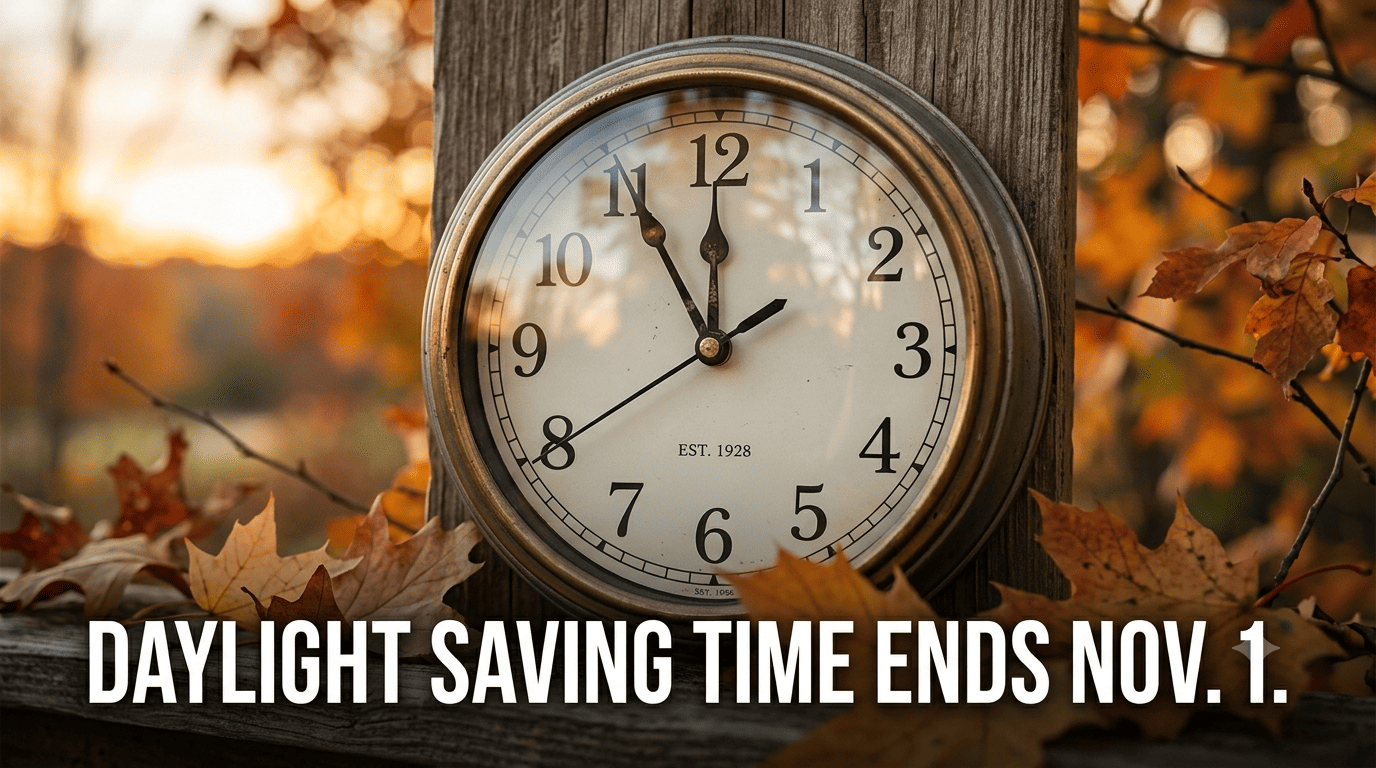
Daylight Saving Time will end in the United States on Sunday, November 1, 2026, at 2:00 a.m. local time, when clocks "fall back" one hour to 1:00 a.m. The change gives most Americans an extra hour of sleep, brighter mornings, and noticeably earlier sunsets as the country moves into standard time for the winter.
When the Clocks Change
The switch happens overnight, so most people will experience it while asleep. At 2:00 a.m. on November 1, clocks are set back to 1:00 a.m., which means the hour between 1 a.m. and 2 a.m. effectively happens twice that night. Daylight Saving Time will not resume until the second Sunday of March 2027.
Why We "Fall Back"
Daylight Saving Time runs from the second Sunday in March to the first Sunday in November under the Uniform Time Act of 1966, as amended by the Energy Policy Act of 2005. Turning the clocks back in November shifts an hour of daylight from the evening to the morning, giving darker evenings but brighter starts to the day as winter approaches. Commuters driving home after work will notice it most immediately — headlights come on by 5 p.m. for many, and road safety officials note that driving conditions tend to be more hazardous in the week right after the switch.
Not Every State Changes Its Clocks
Daylight Saving Time is not observed everywhere in the US. Arizona (outside the Navajo Nation) and Hawaii stay on standard time year-round, as do Puerto Rico, Guam, American Samoa, the Northern Mariana Islands, and the US Virgin Islands. Arizona dropped the practice back in 1968, reasoning that an extra hour of evening sunlight would only drive up cooling costs in the summer heat.
Could This Be One of the Last Clock Changes?
Efforts to end the twice-yearly clock change have been circulating in Congress for years without becoming law. The Sunshine Protection Act, which would make Daylight Saving Time permanent, passed the Senate unanimously in 2022 but stalled in the House and has been reintroduced in every Congress since without a floor vote. Separately, some state legislatures have moved toward permanent standard time instead. As of the 2026 fall-back, none of these proposals have taken effect — the clocks are still changing on the traditional schedule.
Key Facts
- DST ends: Sunday, November 1, 2026, at 2:00 a.m. local time
- Clocks: Set back one hour, to 1:00 a.m.
- Next change: Clocks "spring forward" again in March 2027
- States that don't observe DST: Arizona (except Navajo Nation) and Hawaii
- Territories that don't observe DST: Puerto Rico, Guam, American Samoa, Northern Mariana Islands, US Virgin Islands
- Governing law: Uniform Time Act of 1966, as amended by the Energy Policy Act of 2005
- Status of permanent DST legislation: Still stalled in Congress as of 2026
Frequently Asked Questions
What time do clocks change in November 2026? Clocks fall back one hour at 2:00 a.m. on Sunday, November 1, 2026, becoming 1:00 a.m.
Do we gain or lose an hour of sleep? Most people gain an hour, since the clocks move backward.
Is it "daylight saving" or "daylight savings" time? The correct term is "daylight saving time" — singular "saving," since the idea is to save daylight.
Which states don't change their clocks? Arizona (outside the Navajo Nation) and Hawaii stay on standard time year-round, along with several US territories.
When does Daylight Saving Time start again? It resumes on the second Sunday of March 2027, when clocks "spring forward" one hour.
Has Daylight Saving Time been made permanent? Not yet. The Sunshine Protection Act, which would end the twice-yearly clock change, has passed the Senate but remains stalled in the House as of 2026.